We accept
Medicare Advantage plans to fit your dental needs.
Medicare Advantage plans to fit your dental needs.

It’s never too late to take control of your dental health. Whether it’s been a few months or several years since you last saw a dentist, our team at Superior Dental can help you get your smile back on track. Poor dental health can affect your ability to speak with confidence, eat the foods you love and laugh without being self-conscious about your teeth.
That’s why we offer a comfortable, nonthreatening environment where our patients are free to ask questions and never have to worry about being admonished due to the condition of their teeth.
During your first dental exam at Superior Dental, your dentist will look for signs of:
We have many patients who have been coming to us for years because they trust us to keep their mouth, teeth and gums healthy. We look forward to developing that same level of trust with you.
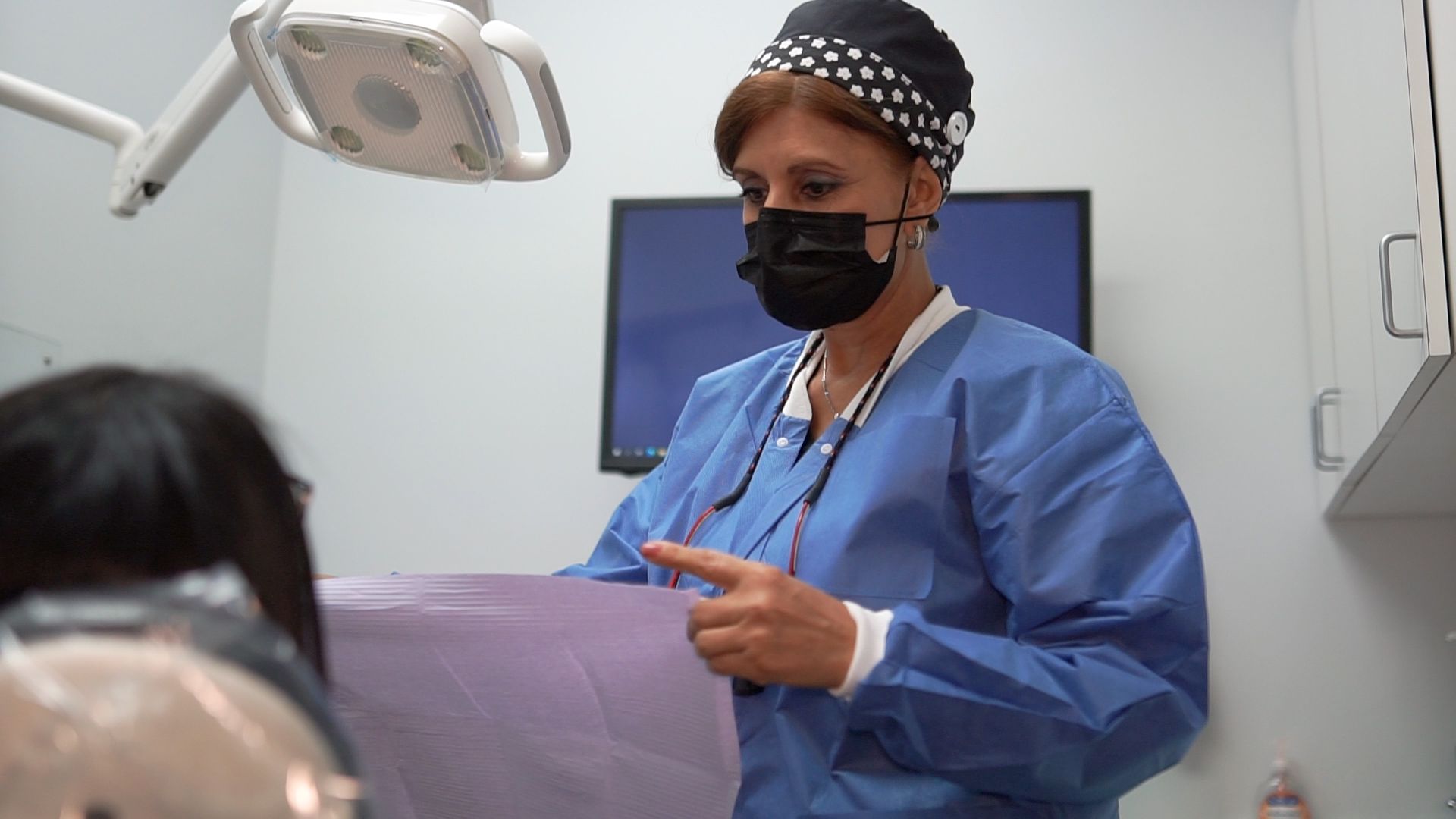
Most people call our dental office when they want to have their teeth cleaned. Professional teeth cleanings are an important part of dental health because they remove the plaque and calculus that causes tooth decay. Plaque is a colorless layer of bacteria that builds up on your teeth every time you eat or drink. The bacteria in plaque convert the sugars in food and beverages into corrosive acids that damage the tooth enamel and cause dental decay in the form of holes in your teeth called cavities.
That’s why your mother often admonished you to brush after every meal when you were a child. Nevertheless, even the most faithful oral hygiene routine can’t remove all of the plaque on your teeth. In less than 24 hours, plaque hardens into a substance called calculus, also called tartar. Only a professional teeth cleaning can remove plaque and calculus from the surfaces of the teeth and those hard-to-reach places between the teeth.
Teeth cleanings don’t simply remove plaque and calculus from the surface of your teeth. They also prevent bacteria from migrating to the teeth below the gums and causing an infection of the gums. This is called periodontal disease, or gum disease. The first stage of the disease is gingivitis. Symptoms include red and swollen gums or gums that bleed when you brush and floss. This is the only stage of gum disease in which the disease can be cured. Here are some examples of the types of hygiene treatments:
People who only need their teeth cleaned above the gum line to remove plaque, calculus and surface stains will receive a prophylaxis teeth cleaning, also known as a “prophy.” These healthy-mouth cleanings are recommended twice a year and are often covered by dental insurance.
Gingivitis is the first stage of gum disease. It’s also the only stage that is reversible. Gingivitis therapy includes additional services to remove plaque on the teeth and just below the gum line.
People who are diagnosed with an active gum infection need treatment both above and below the gum line to remove the harmful bacteria. Scaling & root planing (SRP) is a non-surgical treatment that removes bacteria and smooths out exposed root surfaces. The dentist also may apply an antibiotic to kill bacteria. SRP may take more than one office visit to complete. After the treatments, the dentist may prescribe a periodontal maintenance routine to help manage the disease. In more advanced cases, the dentist may recommend you see a gum specialist called a periodontist.
Half of Americans over the age of 30 and 70 percent over the age of 65 have some form of gum disease, according to the Centers for Disease Control and Prevention (CDC). Periodontal disease is the most common cause of tooth loss in adults. Just as the bacteria in the mouth breaks down sugar to create acids that attack the teeth, it also attacks the ligaments, tissue and bone that hold teeth in place under the gums. Over time, the gum tissue pulls away from the tooth, creating “pockets” where more bacteria can gather. As periodontal disease progresses, you may notice bad breath, the gum line receding, or the teeth shifting out of position. Scaling & root planing and other periodontal treatments can remove bacteria, but they can’t repair the damage. Like diabetes or arthritis, periodontal disease is a chronic, systemic disease. It’s only reversible at the gingivitis stage. Once it progresses, it can be managed but not reversed.
While spicy, garlicky foods are often blamed for bad breath, this condition is more often caused by germs in your mouth. When bacteria cause dental decay, the damaged cells release an unpleasant odor. Halitosis, the medical term for bad breath, affects 25 percent of the U.S. population. However, the problem is easily controlled. Professional teeth cleanings and gum treatments will kill the germs that cause bad breath. Afterward, routine brushing, flossing and rinsing with a mouthwash will keep bad breath under control.
As part of your first visit to our office, you will be offered an oral cancer screening. This is a potentially life-saving screening recommended to everyone over the age of 18. It is a quick, painless test that allows the dentist to see signs of oral cancer that are not visible to the naked eye. Oral cancer is dangerous because it often has no symptoms in its early stages. In later stages, symptoms include lumps in the cheek, pain when chewing and sores in the mouth. By the time these symptoms appear, the disease may have metastasized to other locations, usually the lymph nodes in the neck. According to the Oral Cancer Foundation, oral cancer kills one person in the United States every hour. The death rate for oral cancer is higher than that of more commonly known cancers including cervical cancer, Hodgkin’s lymphoma, testicular cancer and thyroid cancer. Early detection saves lives.
If you’ve been under a lot of pressure, you may be grinding your teeth in your sleep without realizing it. Teeth grinding, which is also called bruxism, is a common condition that affects up to 40 million Americans. It is often caused by stress. However, it can also be the result of crooked teeth or a “bad bite.” If it's severe enough, it can wear down the enamel of your teeth. Our dentist will look for signs of teeth grinding and may ask you if you have any of these symptoms:
Our dentist can fit you with a mouth guard to protect your teeth while you sleep. Since it’s worn at night, this type of mouth guard is also called a night guard.
We look forward to finding a convenient day and time for you to come in for a comprehensive dental exam. Call Superior Dental today at (954) 519-2224.